
Home modifications
Staying in your own home and carrying on doing the things you have always done. For people with a disability, and for older people, anywhere in New South Wales.
What usually needs doing
Most of the work falls into five areas. You do not need to know which one you need before you ring.
- Getting in and out of the house
- Using the bathroom and toilet on your own
- Stairs, steps and changes in level
- A kitchen you can still cook in
- Doorways wide enough to turn around in
A single grab rail, a ramp, a full bathroom or a lift. Small jobs are worth doing properly, and we will say so if that is all you need. Our own trades do the work, people we have used for years.
Areas of the home
Every job starts in a room where something has become difficult. This is what that usually turns into.
| Area | The work | What you get back |
|---|---|---|
| Front entry and approach | A level path or a ramp, handrails on both sides, a landing big enough to turn on, and light you can see by. | You get in and out of your own front door on your own, in the dark and in the rain. |
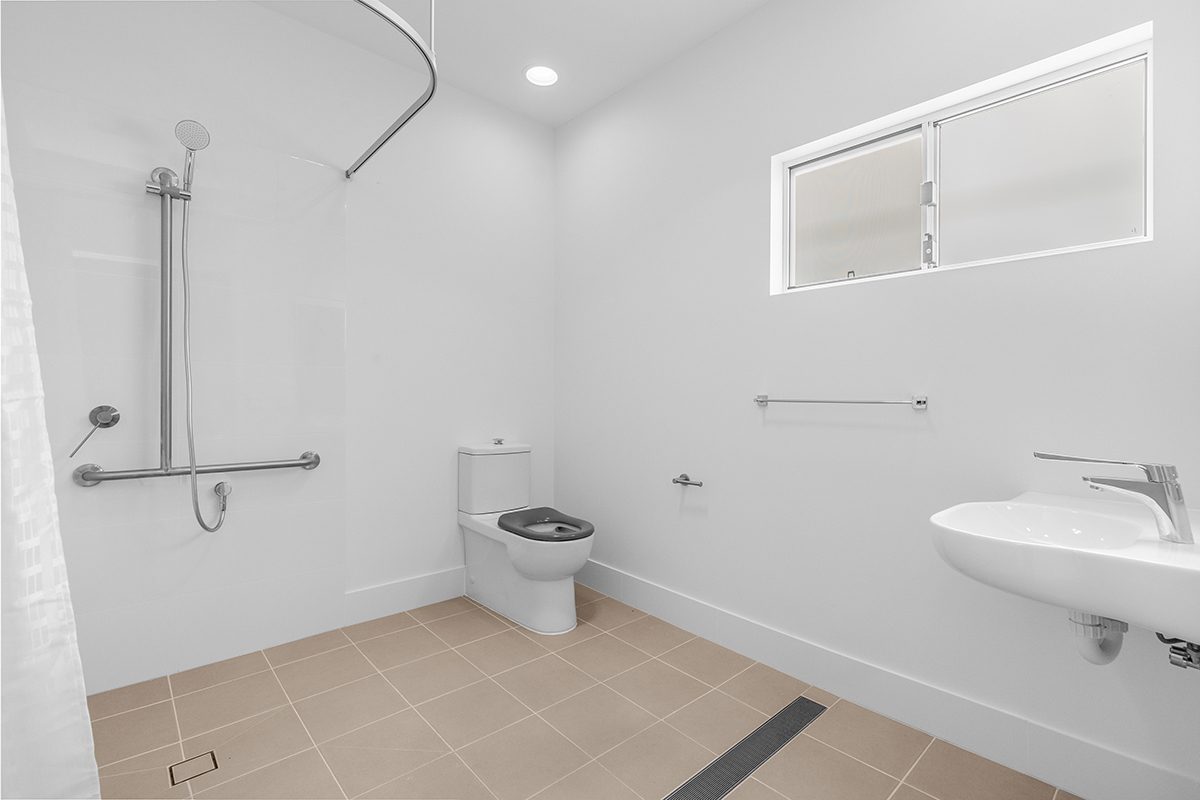
| Bathroom and toilet | Level entry shower, rails set where you actually reach for them, a raised pan, and a floor that does not get slippery when it is wet. | Washing and using the toilet without help, and without the worry that goes with it. |
| Kitchen | Bench at a height that works sitting down, clear space underneath, pull-out shelving, lever taps and appliances you can reach. | You keep making your own meals instead of waiting on somebody else. |
| Stairs and level changes | Handrails both sides, step edges marked so you can see them, a half landing, or a stairlift or through-floor lift where stairs will never work. | The upstairs of your house stays part of your house. |
| Doorways and hallways | Wider doorways, lever handles instead of round knobs, thresholds taken out, and room to turn a chair or a walker around. | You move through the house without scraping the frames or getting stuck. |
| Bedroom | Room to get in and out on either side, a ceiling hoist track where one is needed, a wardrobe you can reach, and better light at night. | Getting into bed safely, and carers who can work without hurting their backs. |
What happens when you call
Nobody turns up at your door unannounced, and nothing gets built before you have seen the price.
We talk
A phone call, no charge. Tell us what is difficult at the moment and we will say honestly whether we can help.
We come and look
A home visit at a time that suits you. You will know who is coming and when.
You get it in writing
What we would do, what it costs, and which funding is likely to pay for it.
The work gets done
We manage the trades and check the finished work before anybody asks you to pay for it.
Tell us what you are trying to do
A short call is usually enough to work out whether we can help, and roughly what it is likely to cost.
Or ring 0413 623 743